2027 Subsidy Reform: How the Market for Solar Installers is Changing – and What You Should Do Now


The German photovoltaic market is experiencing a fundamental turning point. For over 20 years, the fixed feed-in tariff has been the backbone of PV profitability, but a fundamental system change is imminent from 2027: The draft proposal from the Federal Ministry for Economic Affairs and Climate Action plans to abolish the fixed tariff for new installations under 25 kWp as of January 1, 2027. For solar businesses, this means: The market rules are fundamentally changing.
At the same time, the market is sending contradictory signals. In the first quarter of 2026, new photovoltaic systems with approximately 3.5 gigawatt-peak went online – a 6 percent decrease compared to the same period last year. The residential segment is particularly affected: The federal association reports a 21 percent drop in PV building installations under 30 kWp. At the same time, many solar projects have not been cancelled, but merely postponed. Numerous installation companies report increasing demand and re-filling order books.1
What is really changing and what strategies help not only to survive but to thrive in this new environment?
Before the Reform: What you had previously
Until the end of 2026, the solar industry benefits from a clear, state-guaranteed support system. The current feed-in tariff is 7.78 cents per kWh for surplus feed-in for systems up to 10 kWp, or 12.34 ct/kWh for full feed-in. These fixed tariff rates have enabled reliable investment calculations for end customers: Make a purchase decision, install the system, plan for 20 years.
For solar businesses, this meant: a strong, easily communicable sales argument. The payback calculation was simple and convincing. The market for single-family homes boomed. In 2025, the total number of new residential PV installations was almost 400,000. Significantly less than the peak of over 670,000 installations in 2023, but still a high, stable market level.
After the Reform: What is changing
The planned change is profound. Instead of a state-guaranteed feed-in tariff, operators are to sell their solar power at the current market price. This means: no more fixed tariff rate; revenues can fluctuate and, in the worst case, disappear entirely.
The implications for solar installers are concrete:
- Sales argument removed: The previous purchasing incentive "secure feed-in tariff" will become obsolete from 2027.
- Increased consulting effort: Without a fixed feed-in tariff, feeding in power becomes more complex and volatile. According to a Fraunhofer-ISE analysis, small rooftop systems need approximately 15% more self-consumption to remain economically viable at the level of the EEG tariff.
- Structural change towards system solutions: Instead of relying on feed-in tariffs, the draft law proposes that smaller solar systems, combined with storage, primarily serve self-consumption – the installation of a storage unit should "become the norm in the future".
- Smart meters become mandatory: As of June 1, 2026, all new PV systems from 7 kWp must be equipped with a smart meter and a control box.
Where the true growth opportunities lie
Not all market segments are declining. While the private residential sector faces pressure, two segments are showing a clear upward trend:
Commercial Rooftop Systems: The New Driving Force
The shift is particularly evident in the commercial rooftop segment: In Q1/2026, commercial installations already accounted for 60 percent of the total installed capacity – in 2023, it was still around 25 percent. The untapped potential on industrial and logistics rooftops is enormous: Industry experts estimate that over 80 percent of suitable areas are still unused. For commercial businesses with high self-consumption, PV systems are now profitable even without government subsidies.
Battery Storage: A Booming Ancillary Business
In the first quarter of 2026, contrasting trends emerged: While PV additions decreased by six percent compared to the same period last year, the battery storage market saw a 67 percent increase. Storage is becoming a necessity, not an option – those who master this area secure stable additional revenues.
Pull-forward effects until the end of 2026: Seize the window of opportunity
Several factors point to a market recovery by year-end: Catch-up effects after a weather-related weak start to the year, the anticipated EEG changes in 2027, and a surge in demand due to geopolitical tensions. From January 1, 2027, the framework conditions for new photovoltaic systems are expected to shift so significantly that commissioning them in 2026 will yield several thousand euros more in revenue than waiting. Anyone who commissions their solar system in 2026 will secure the current feed-in tariffs for a full 20 years.
Why accurate roof surveying is more crucial now than ever
The reform also alters the demands on planning quality. If profitability relies more heavily on self-consumption , design and dimensioning must be accurate. An oversized system that feeds more into the grid than the owner consumes loses its financial advantage. An undersized system does not fully exploit its potential.
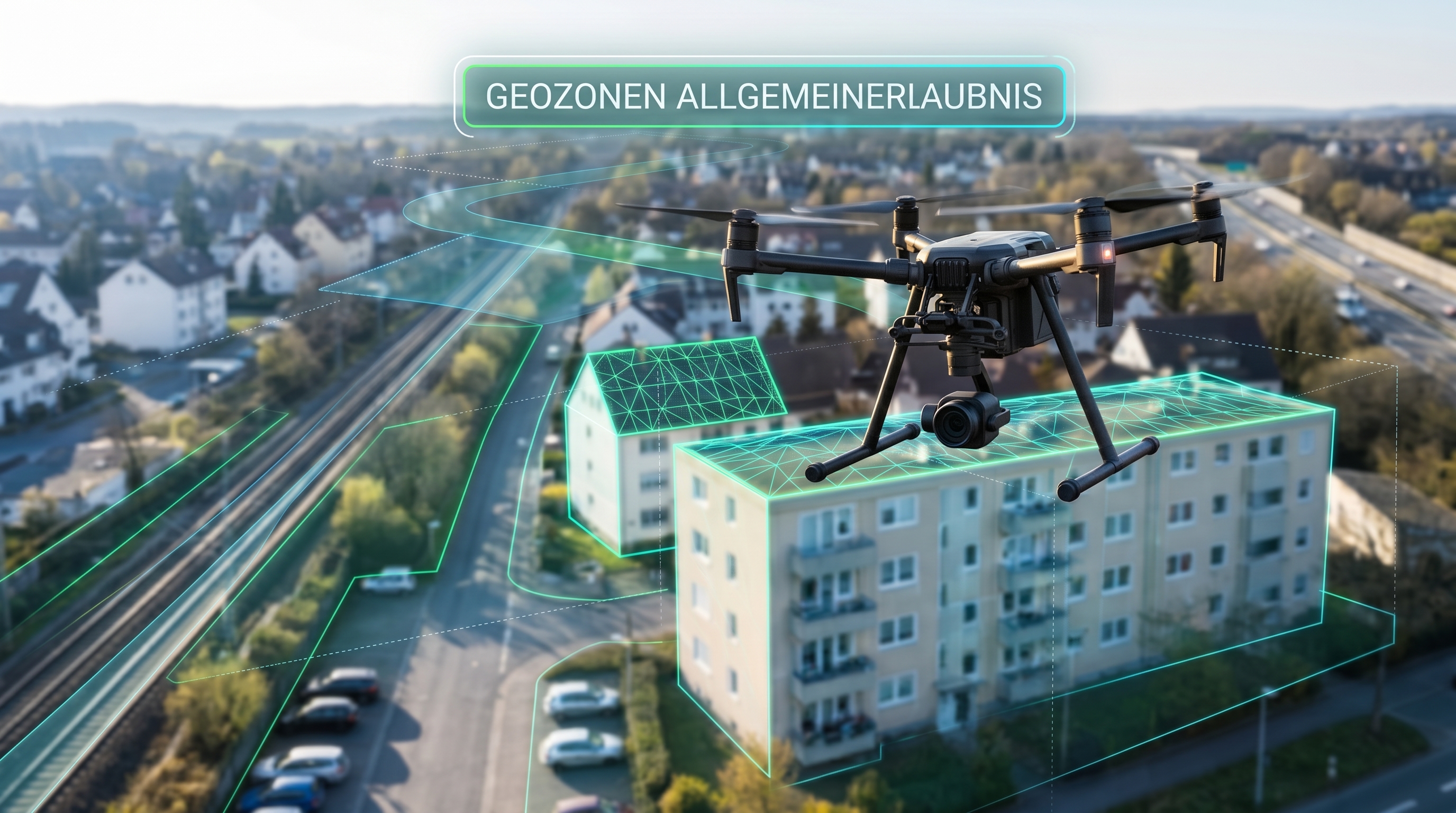
This is precisely where precision is crucial and this is exactly where modern drone surveying pays off.
With the Airteam Fusion Plattform, you receive a DIN-certified 3D building model in less than 24 hours with an accuracy of up to 99.9% and a 1-3 cm tolerance at 40 m flight altitude. No roof inspection needed, no risk for your team, no source of error.
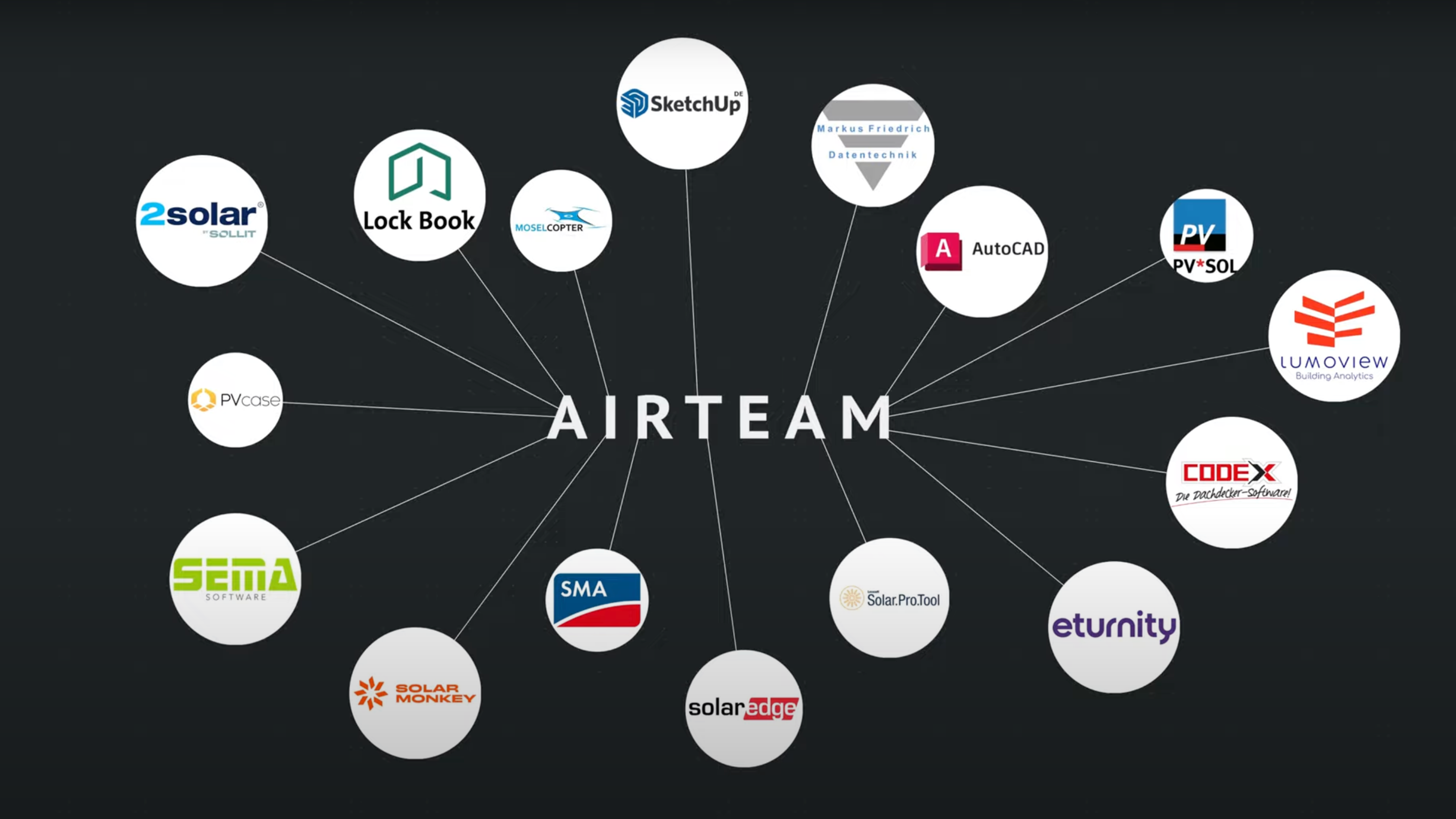
You export the data directly to PV·SOL, Eturnity, AutoCAD, or SketchUp – without media breaks, without rework. And during the next pull-forward effect boom, you'll create multiple quotes daily instead of spending half a day per property on the roof.
How others successful solar businesses Our case studies, from 1Komma5° Rosenheim to Svea Solar, demonstrate how they benefit from this efficiency.
Conclusion: Don't wait – position yourself now
The 2027 subsidy reform is no cause for panic. It's an invitation to reposition. Anyone who already has a PV system or installs one by 2026 is protected for 20 years by grandfathering clauses. For everyone else, the "feed-in at any cost" model is dying out, and the era of maximum self-consumption is beginning.
For solar businesses, this means:
- Short-term: Utilize Q4 2026 for a sales offensive
- Mid-term: Build storage and system expertise
- Long-term: Develop commercial rooftops as a new core business
Those who combine these three levers and accelerate their planning process with digital drone surveying will enter the new market stronger, rather than fighting against it.