Why solar construction sites are becoming more expensive than calculated


Many costs on the construction site are not caused by poor work, but by a lack of clarity before the start. In this article, you'll learn how solar engineers work with a joint
- Data basis Clarify queries earlier
- Make transfers between office and assembly cleaner
- Reduce additional trips
- Prepare construction sites better
The real cost driver: information fragmentation
The offer is out, the contract is won. In fact, everything should run smoothly now. But this is exactly where the real costs start for many solar engineers. It is not the offer that eats up your margin - but the lack of clarity before the construction site even starts. Unclear data, different levels of information, a fitter standing on the roof and realizing: It doesn't fit like that. The result: phone calls, corrections, additional trips. Time is lost, margins are shrinking - and that for a project that should have been checked off a long time ago.
Planning and communication errors as well as coordination problems are among the most common sources of error on construction sites in the entire construction industry — with damage amounting to billions of dollars per year. According to a BauInfoConsult study, error costs in the German construction industry amounted to around 18.3 billion euros in 2020 - and lack of communication was one of the main causes[1].
On your solar construction site, it often looks like this:
- The scheduler has a sketch of the first local appointment.
- The fitter receives printed photos and handwritten dimensions.
- The scaffolders calculated on the basis of our own estimates.
- The roofer I don't know exactly what the solar engineer is planning.
They all work — but all with different information. This will become a problem on the roof at the latest.
Typical process - and where the margin is lost
Situation 1: The dimensions are incorrect. The fitter finds that a roof opening or cable path cannot be implemented as planned. There is a phone call. Someone drives out again. Two hours lost time — invisible on paper, but real in the calculation.
Situation 2: The material doesn't fit. Because the exact geometry of the roof was not known, too much or too little was ordered. Subsequent deliveries cost time and shipping fees. In the worst case, assembly is delayed by an entire day.
Situation 3: The scaffolder needs to make improvements. The eave height was misjudged. The scaffolding must be rebuilt. Additional costs - and again: not predictable on paper, but regularly in reality.
According to BauInfoConsult evaluations, the share of error costs in construction companies surveyed for their own projects amounted to an average of 15.9 percent of the project turnover — a significant proportion that directly affects the margin.
The solution: Everyone on the same page
The basic problem is not a lack of commitment. It is lacking Information clarity. The solution: a single, common database for all parties involved.
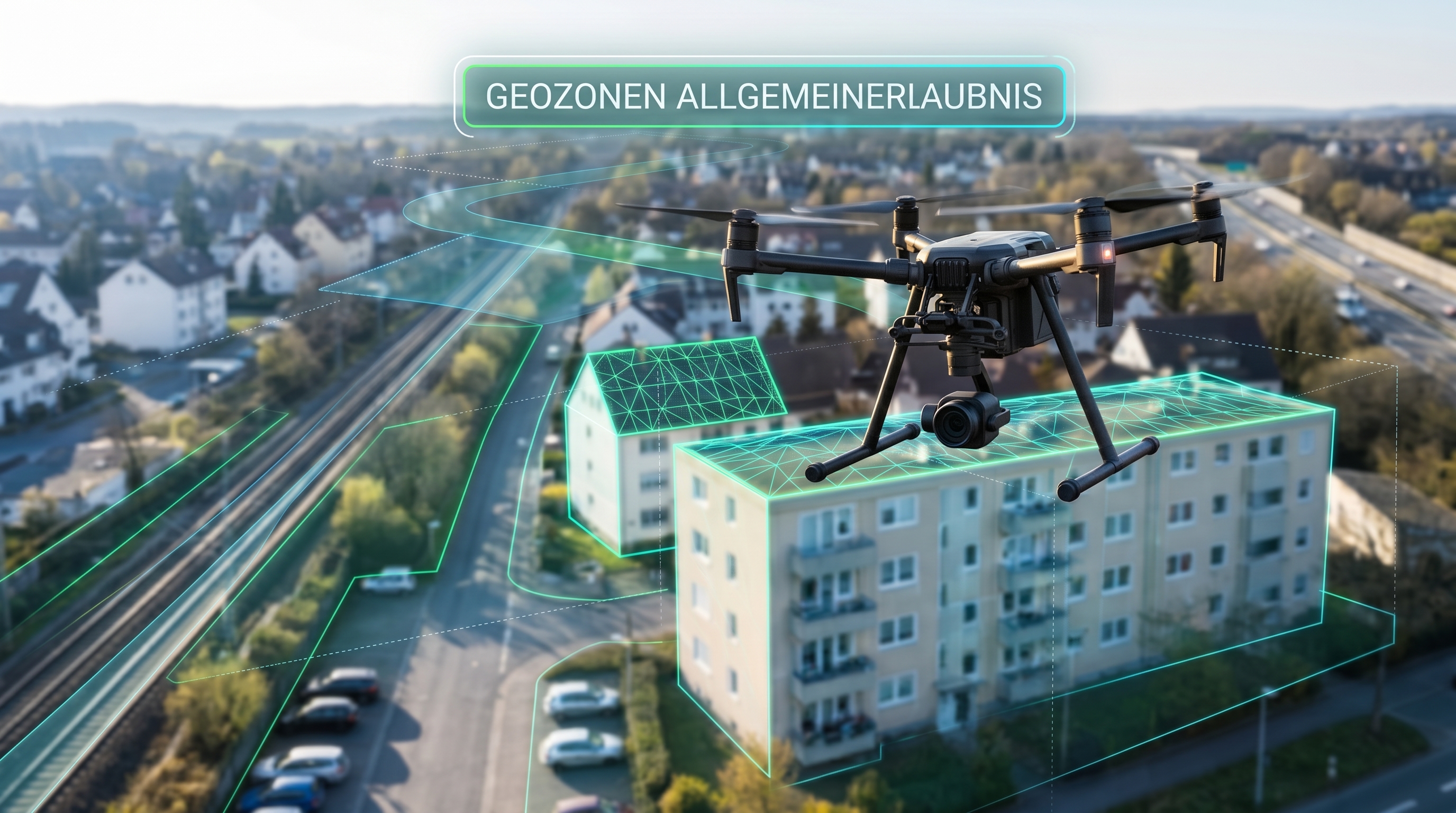
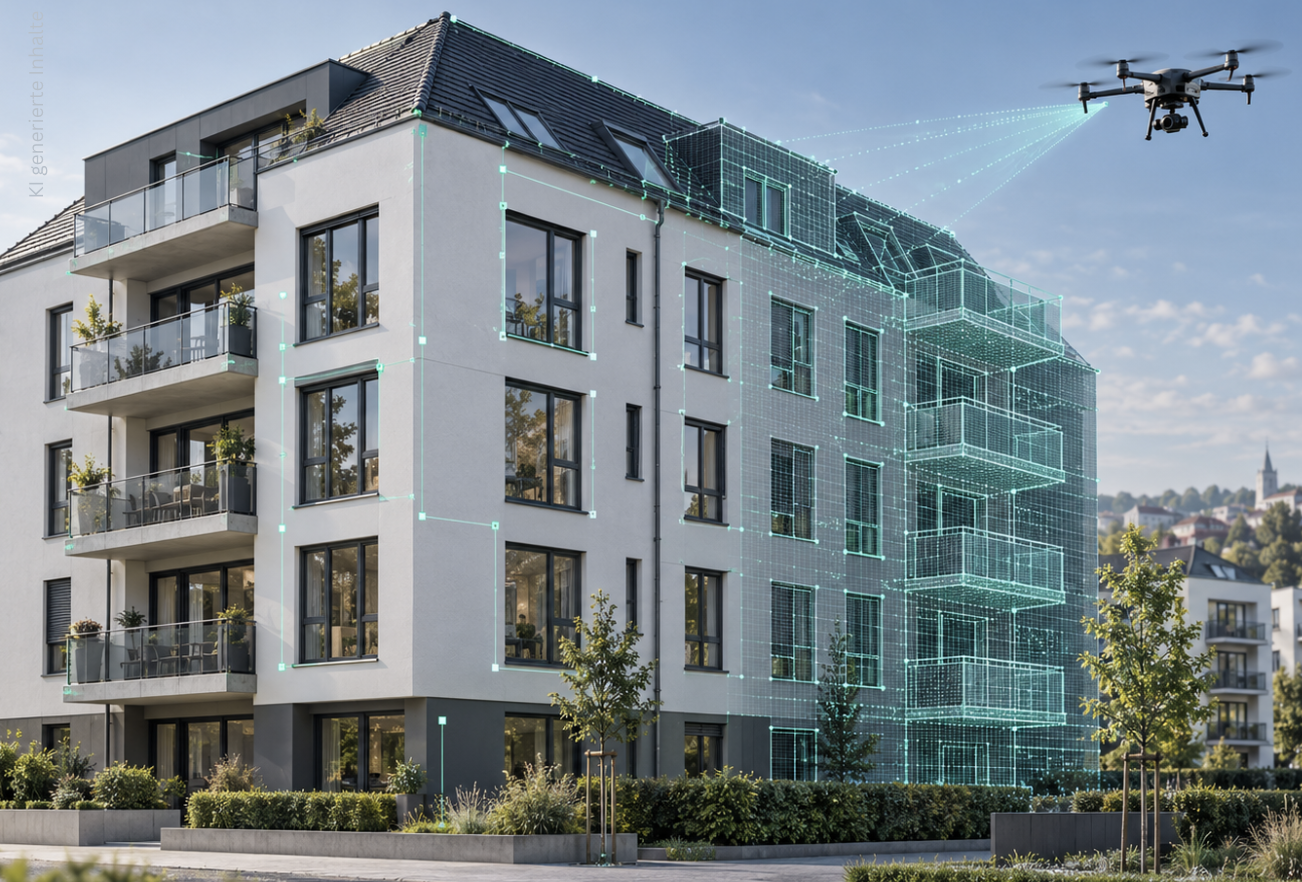
This is exactly what a digital 3D image from drone images offers. With the Airteam Fusion platform, you create a precise, AI-supported 3D building model from a short drone flight - which everyone involved can use in real time.
What is actually changing:
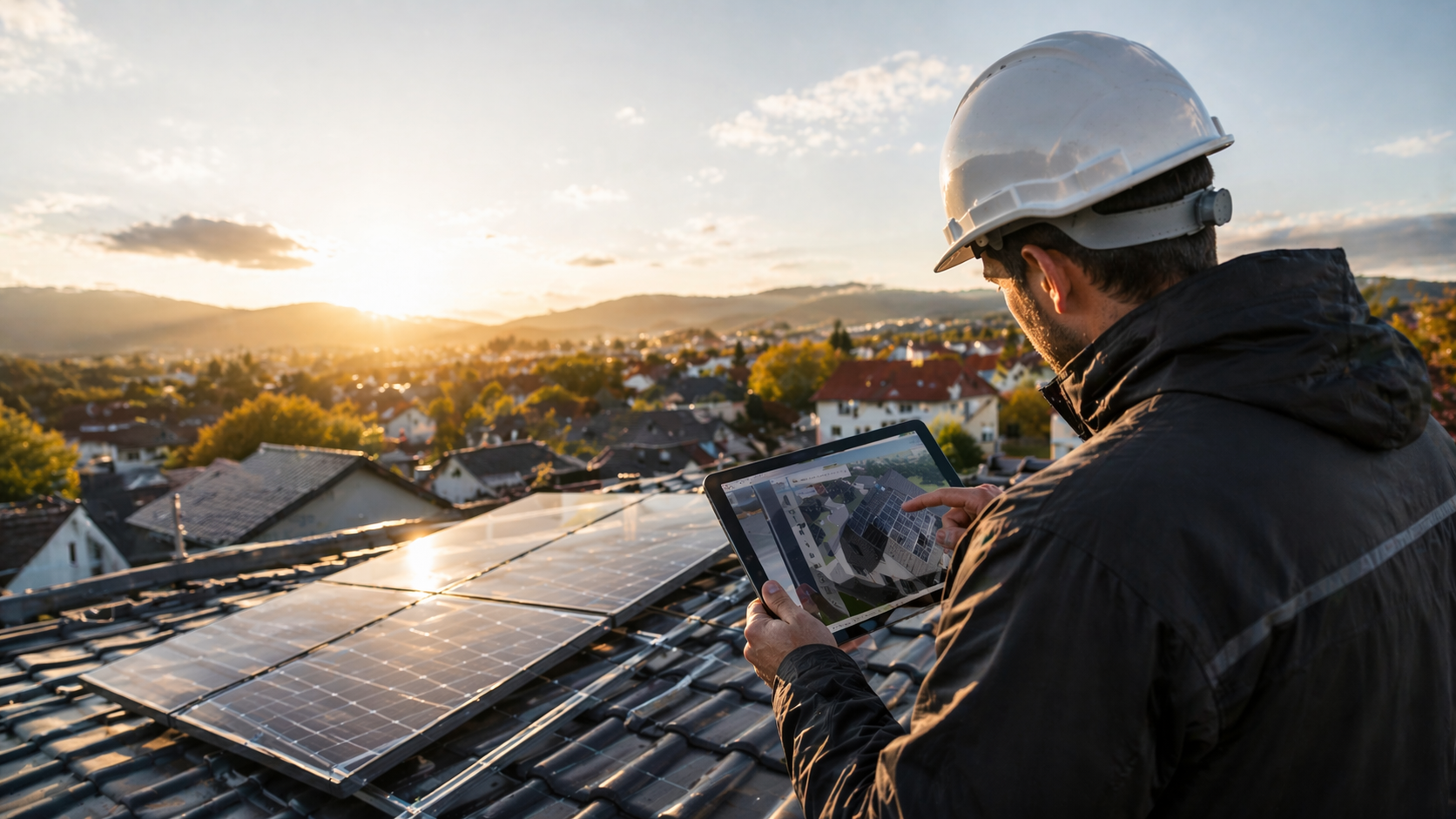
- Installers see the roof in detail in advance - Dimensions, dormers, structures, shading.
- Queries will be clarified before construction starts, not on the ladder.
- scaffolders and roofers obtain exact façade dimensions from the same model.
- Everyone accesses the same, current database - not on sketches from three weeks ago.
Die Airteam Fusion platform delivers 3D building models with an accuracy of up to 99.9% and a tolerance of just 1-3 cm - DIN-certified and available within 24 hours.
It's not a theory. With Airteam, Sascha Kloß from Pro Electrify, for example, receives an exact 3D model in just a few hours - securely, quickly and directly shareable. The results speak for themselves: By using digital 3D measurements, Pro Electrify achieved 38% more transactions and over 90% fewer measurement errors.
Construction site planning doesn't start on the roof
The most common misconception: Construction site problems arise on the construction site. In reality, they arise beforehand — in the phase in which information is missing, distributed, or interpreted differently. Anyone who starts the construction phase with a joint 3D model avoids exactly these gaps. Digital measurement becomes a single source of truth: Everyone draws from the same source, everyone talks about the same roof. Airteam customers report up to 90% time savings when measuring roofs compared to manual measurement — time that you can invest in further projects. And the best part: The 3D model doesn't just pay for itself when you use it for the first time. It remains useful throughout the entire project period — from quotation preparation to assembly planning to maintenance and inspection. Created once, used multiple times.
Conclusion: Clarity beats planning
You can write the perfect offer and make the best calculation. But when everyone on the construction site is working with different information, there are costs that you didn't plan for — and that you can only avoid if you eliminate the cause.
The reason: lack of data transparency. The solution: a digital 3D model that is accessible to everyone. No guesswork, no questions on the roof, no extra trips that eat up your margin.
More clarity. Fewer inquiries. Better margins. That is digital construction site management with Airteam.