Analysis: How the Iran War is Affecting Material Prices in the European Roofing Market



Overall construction costs are three to five percent higher than before the conflict, and according to experts, no quick resolution is in sight. For roofing companies in Europe, the conflict between the US, Israel, and Iran, simmering since February 28, 2026, is more than just a geopolitical headline: it strikes directly at the heart of material cost calculation.
What's behind the price movements, which roofing materials are particularly affected, and how can you prepare your business?
The Geopolitical Background: Why the Iran War is Impacting Construction
The conflict began on February 28, 2026, with joint US-Israeli airstrikes on Iranian military and leadership infrastructure. Iran responded with missile and drone attacks on targets in the region and blocked the Strait of Hormuz, a waterway through which approximately 20% of global oil trade[1] flows.
The consequence: a global fuel crisis. The blocking of the Strait of Hormuz disrupted approximately 20% of global oil trade and massively drove up oil prices, leading to fuel shortages in many countries.
Compounding the problem for Europe: Gas storage levels at the end of February 2026 were significantly below previous years, at 46 billion cubic meters (60 billion in 2025, 77 billion in 2024). This drives up energy prices – and thus indirectly also the production costs of all energy-intensive building materials.
Bitumen: The Heart of the Flat Roof Under Pressure
No material in the roofing trade is more affected by the Iran War than Bitumen.
Global bitumen prices rose in the first quarter of 2025, as the Iran-US-Israel conflict directly impacts the world's largest bitumen exporter. Iran is the leading global bitumen exporter. The conflict has massively disrupted production, export logistics, and price dynamics in the global market.[2]
Since bitumen is a byproduct of crude oil refining, the increased crude oil price directly affects bitumen prices.[3] Brent crude oil temporarily reached up to 120 US dollars per barrel. Crude oil at 120 US dollars per barrel has increased global bitumen prices by 30 to 50 US dollars per ton. In importing countries, delivered bitumen costs rose by 15 to 25% due to combined price and shipping effects.[4]
Of particular concern: An availability risk for bitumen is looming in the coming months. The first refineries in southern Germany are already receiving insufficient bitumen-grade crude oil. For businesses specializing in flat roofs, bitumen sheets, or torch-on membranes, this is a serious warning.
Metal Prices: Aluminum, Steel, and Zinc Under Pressure
In addition to bitumen, the turmoil also affects metal supplies in the roofing trade.
Aluminum
The Iran war is driving industrial metal prices in different directions. Since the outbreak of the war, aluminum on the London Metal Exchange (LME) has increased by ten percent, as traders fear supply shortages.
As a result of the war, the price of primary aluminum rose by 10% to just under US$3,400/t. The German IKB forecasts the primary aluminum price at US$3,600 ± 200/t in the first half of 2026 due to ongoing geopolitical tensions. Reason: The Iran conflict restricts aluminum production in the Gulf States. Furthermore, production facilities in the United Arab Emirates, the world's fifth-largest aluminum producer, were attacked.
For roofers, this means: gutters, gable flashings, facade cladding, and aluminum profiles will become noticeably more expensive.
Steel
Iran is also highly relevant for the steel market: The country exports approximately 4 million tons of finished steel and 7-8 million tons of semi-finished products annually, accounting for about 11% of global trade in semi-finished products.
Hot-rolled wide strip in March 2026 was approximately 6.8% above the previous month's price. An upward trend in steel prices is still expected until the end of Q2 2026. Trapezoidal sheets, steel roof structures, and fasteners are likely to become more expensive in the medium term.
Zinc
Zinc prices have also risen. Iran has become a significant zinc supplier to China, which kept zinc prices there low for a long time. Due to the loss of these export volumes, zinc products relevant for standing seam roofs and drainage profiles are becoming more expensive.
Second-Round Effects: When Energy and Transport Drive Up Costs
The Iran war not only causes direct material price increases but also unleashes so-called second-round effects: In addition to rising diesel and bitumen prices, particularly energy-intensive building materials are also becoming more expensive to produce.
"We are seeing cost increases almost everywhere," says Thomas Reimann, President of the Association of Building Contractors Hesse. This ranges from steel and concrete to insulation materials and films based on crude oil. The erection of cranes has also become more expensive due to higher diesel costs. "Overall, construction costs are three to five percent higher than before the Iran war."[5]
The Iran war not only drives up the prices of gasoline, diesel, and bitumen – it also makes the production of energy-intensive building materials more expensive. In residential construction, material consumption accounts for a significant 22 percent of the gross production value.
According to experts, quick relief is not expected: Even if crude oil prices on the world market were to fall, suppliers are likely to initially stick to their prices.
What your roofing company can do right now
In a market with rising and volatile material prices, one thing matters most: Precision in estimating. Overestimating material quantities ties up capital in overpriced inventory. Underestimating means reordering later at even higher prices.
Three levers you can apply now:
- Precise material quantity planning: Digital 3D surveys eliminate typical measurement and estimation errors when determining quantities. Especially with bitumen and aluminum, the most expensive and volatile materials, every square meter saved pays off.
- Proactive procurement: If it's foreseeable that prices will continue to rise, a strategic stock purchase for ongoing projects is worthwhile, provided you know your quantities precisely.
- Dynamic quote calculation: Incorporate material price escalation clauses into contracts to protect yourself against price increases during the project duration.
How Airteam helps you control material costs
The Airteam Fusion Platform provides you with a DIN-compliant, centimeter-accurate 3D roof model from a single drone flight, in less than 24 hours. This means:
- No more estimation errors in area calculation – you know exactly how much bitumen, aluminum, or insulation you need
- No expensive reorders at increased market prices because the initial estimate was incorrect
- Faster Quotes despite volatile prices – because you know your material quantities in hours instead of days
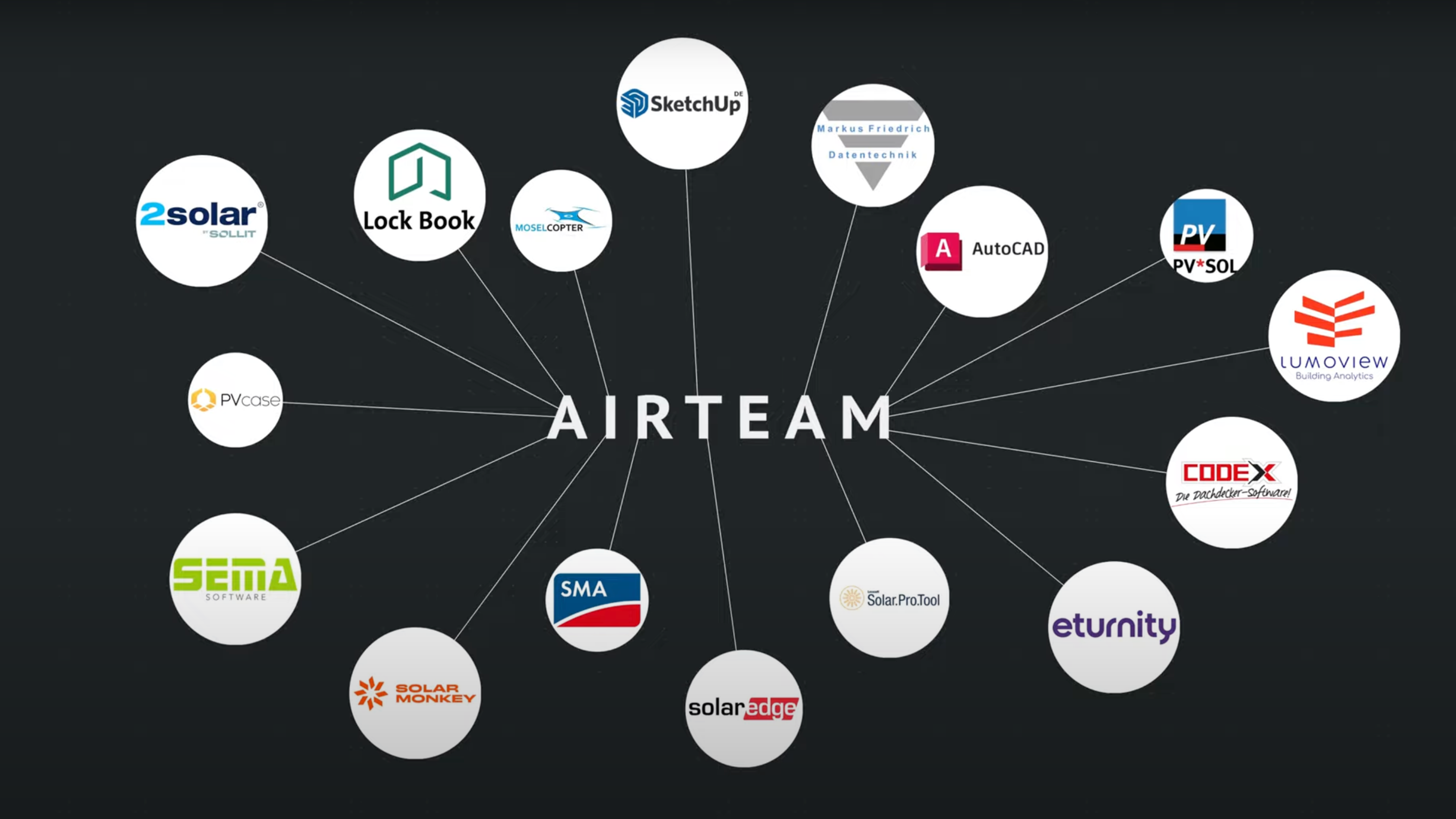
- Seamless Export into your calculation software (MF Dach, SEMA, AutoCAD, and many more)
In a market where overall construction costs are three to five percent higher than before the Iran war, precise quantity surveying is not a nice-to-have; it's a direct competitive advantage.
Outlook: Long-term structural changes in the material market
Unlike the strait blockade, damage to energy infrastructure is not a temporary phenomenon. According to Qatar Energy, repairing the damaged LNG facilities in Qatar will take three to five years.
Experts fear that the Iran war is slowing down new construction, which had just gained momentum. For roofing companies looking to benefit from the increased demand for renovations, this means: costs continue to rise, while competition for contracts simultaneously increases.
The companies that now invest in digital efficiency – precise measurements, lean calculation processes, less material waste – gain a decisive advantage.